The Bold and the Beautiful Spoilers: Ridge Unraveling — Is a Brain Tumor Finally Exposed?

The Bold and the Beautiful Spoilers: Ridge Unraveling — Is a Brain Tumor Finally Exposed?
The moment Hope realizes that her mother is no longer just tired, but emotionally hollowed out, everything changes. Brooke Logan isn’t simply exhausted from work or family drama. She is worn down by years of emotional warfare — loyalty to battles that no longer serve her, love that demands sacrifice without protection. What Hope sees is not weakness, but erosion.
For years, the Logan–Forrester war has masqueraded as passion, destiny, and legacy. Now it looks more like slow poison. Brooke still moves with elegance, but there’s hesitation in every step, as if every decision must be measured against the risk of igniting yet another conflict. Watching this, Hope reaches a painful clarity: survival sometimes means walking away, not fighting harder.
Hope’s resolve doesn’t come from anger. It comes from grief — the kind that sharpens vision instead of clouding it. She sees what Brooke has long refused to admit. Ridge no longer challenges Brooke to grow. He pulls her into constant battles that drain her identity and fracture the Logan name. Passion once mistaken for destiny has become endless combustion without warmth.
When Hope urges Brooke to step away from Ridge, it’s not a rejection of love — it’s an act of preservation. She suggests something radical but necessary: realign professionally with Katie, stabilize the Logan legacy, and reclaim agency before everything fractures beyond repair. It’s not abandonment. It’s survival.
For a brief moment, Brooke allows herself to imagine that life — quieter, steadier, less reactive. But that moment is shattered when Ridge storms in.
He hears just enough to feel betrayed. In his already fragile mental state, Hope’s words don’t sound like concern. They sound like conspiracy. A future being planned without him. Jealousy ignites instantly, but this isn’t romantic insecurity alone — it’s the rage of a man who believes his authority is slipping away.
Ridge doesn’t pause. He doesn’t reflect. He reacts.
The slap is sudden, shocking, and irreversible.
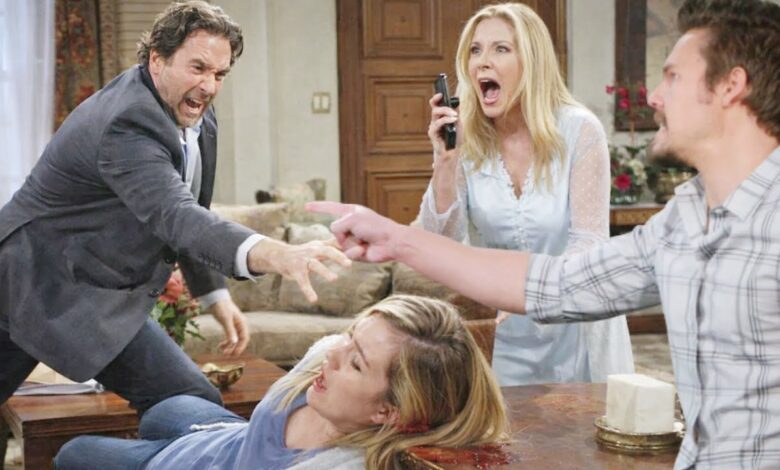
Hope stumbles, strikes her head, and the room tilts into chaos. At first, she insists she’s fine — more focused on calming Brooke than acknowledging her own pain. But the symptoms creep in quietly: dizziness, confusion, difficulty focusing, words slipping away mid-thought. A mild traumatic brain injury doesn’t announce itself dramatically. It infiltrates slowly.
As Hope lies in a hospital bed, disoriented and vulnerable, Brooke’s guilt becomes unbearable. The illusion she clung to — that Ridge could still listen, restrain himself, change — collapses completely. Love, she realizes, should never cost her children their safety.
The fallout is swift and brutal.
Brooke emotionally withdraws from Ridge, unable to reconcile the man she loves with the man who hurt her daughter. Ridge oscillates between remorse and defensiveness, framing the incident as provoked, unintentional — but intention no longer matters. The damage exists.
Liam’s response is immediate and unforgiving. For him, there is no nuance. Hope was assaulted. She was injured. And Ridge has been shielded from consequences for far too long. Legacy, power, and excuses mean nothing when safety is at stake. Liam becomes the voice of accountability Ridge can no longer intimidate or control.
And this is where whispers begin.
Ridge’s increasingly volatile behavior — the paranoia, the impulsive rage, the inability to regulate emotion — raises a disturbing question. Is this simply entitlement finally exposed? Or is something deeper at play? Fans are already speculating about a possible medical explanation: a brain tumor, neurological disorder, or undiagnosed condition amplifying his aggression and loss of control.
The Bold and the Beautiful has walked this road before. A hidden illness would not excuse Ridge’s actions — but it could explain the unraveling.
For Hope, recovery becomes both physical and emotional. The injury forces her to reassess her role in a family system built on dominance rather than protection. For Brooke, the crossroads she’s avoided for years is now unavoidable. Leaving Ridge is no longer about heartbreak — it’s about safeguarding her children, her name, and herself.
The slap changes everything.
Private volatility has become public consequence. Loyalty is no longer a defense. And whether Ridge’s breakdown is psychological, medical, or moral, one truth is clear: nothing in this family will ever return to what it was before.
Because some moments don’t just shock.
They rewire the future.