B&B Shock Spoilers: “Grandma, I’m Luna” — Sheila’s World Shatters as Dylan Reveals the Impossible Truth

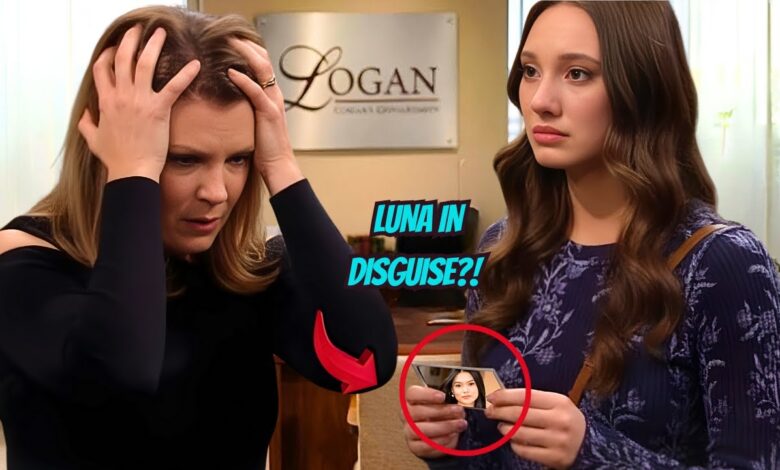
B&B Shock Spoilers: “Grandma, I’m Luna” — Sheila’s World Shatters as Dylan Reveals the Impossible Truth
Sheila Carter believed she had already endured the worst shock a human heart could survive. She had buried her granddaughter. She had mourned, prayed, and rebuilt her life around the certainty that death was final. But The Bold and the Beautiful delivers a twist so psychologically devastating that it redefines everything Sheila thought she knew about grief, identity, and love.
When Dylan stands before her and says the words, “Grandma, I’m Luna,” the world does not erupt into chaos. Instead, it freezes.
This is not the loud, explosive shock soaps often rely on. This is quieter. Crueler. The kind of revelation that rearranges reality from the inside out.
Sheila doesn’t scream. She doesn’t collapse. She studies Dylan’s face, searching for madness, cruelty, or deception—anything that would allow her to reject what her heart already recognizes. Because the voice, the hesitation, the fear hidden beneath determination… it all belongs to Luna. The granddaughter she watched die. The child whose coffin she followed into the ground.
And that is where the horror truly begins.
If Dylan is Luna, then death was a lie. Grief was manipulated. And Sheila’s years of mourning were built on silence so profound it borders on betrayal.
As Dylan explains—carefully, haltingly—the truth unfolds like a wound being reopened layer by layer. Luna did not disguise herself for deception. She disappeared to survive. Threats Sheila never knew existed. Powerful forces that made Luna’s continued existence “inconvenient.” A choice made in terror: erase Luna, create Dylan, and never look back.
Sheila’s reaction is not relief. It is nausea.
Every memory reshapes itself. Every tear she shed becomes a question. Every prayer whispered into the dark now echoes with cruel irony. Luna listened to her grieve. Luna watched her break. And said nothing.
Yet as Dylan speaks, something destabilizing happens. Sheila begins to notice what she dismissed for years—the gestures, the habits, the nervous thumb rubbing against the palm, the avoidance of mirrors, the way Dylan perched on the edge of the couch exactly the way Luna used to when she was afraid. These details rise like ghosts, demanding to be acknowledged.
Denial becomes violent.
Acceptance becomes terrifying.
Because believing Dylan means accepting that the world is far more dangerous than Sheila ever imagined—that doctors, systems, and authority figures may have aided in erasing a child’s identity. It means confronting the idea that death itself can be negotiated if fear is strong enough.
And worse, it means reconciling love with fury.
Sheila’s anger is justified. Luna allowed her to mourn a living child. But that anger collides with unbearable empathy when Dylan admits the most devastating truth of all: he attended his own funeral in secret. He listened to Sheila sob through closed doors, unable to comfort her without destroying the fragile safety that kept them alive.
That revelation breaks something open inside Sheila.
Because no lie comes without cost. And Luna paid for survival with her entire identity.
This is not a miracle reunion. It is a reckoning.
Sheila realizes that she is standing between two impossible choices: disbelief, which preserves the story she has lived with, or belief, which demands she rebuild her entire understanding of love, loss, and truth. And in that suspended moment, she understands the real shock is not that Luna might be alive—but that the story of her life has never been complete.
When Sheila finally whispers Luna’s name, Dylan flinches. Because hearing it is both a gift and a wound. And in that instant, Sheila knows that whatever comes next will not be neat or healing in the traditional sense. It will be slow. Painful. Fragmented.
Grief does not vanish just because the dead return.
It evolves.
In the days that follow, the house fills with an eerie quiet. Ordinary sounds—the hum of appliances, footsteps in the hallway—become unbearable reminders that Luna lived among them all along under another name. Sheila finds herself watching Dylan constantly, searching for Luna in his smile, his instincts, his quiet concern for her well-being.
Sometimes she finds her.
Sometimes she finds the years she lost.
And Dylan, for his part, lives in a constant state of anticipation—bracing for rejection, prepared to disappear again if necessary. That fear mirrors the child Sheila once knew, and it forces her to confront the power her acceptance holds. Belief is no longer abstract. It is survival.
The Bold and the Beautiful rarely ventures this deeply into psychological territory, but this storyline does something extraordinary. It asks whether love can survive profound deception. Whether grief has an ending. Whether identity, once erased, can ever be fully reclaimed.
This is not about resurrection.
It is about endurance.
And as Sheila reaches for Dylan’s hand—warm, real, undeniably alive—she understands a devastating truth: Luna did not come back from the dead. She never left. She carried herself forward in another shape, waiting for the moment she could finally be seen.
What happens next will not be explosive.
It will be far more dangerous than that.
Because truth, once spoken, refuses to disappear again.